
Identify
Arrival walls, entrances, compounds and building-facing surfaces that establish a clear sense of place.
Exterior visual systems for façades, courtyards, compounds, entrances, hoardings and public-facing surfaces — specified around the real material, exposure and environment.
Outdoor work has to do more than look good. We consider the substrate, weather exposure, UV, moisture, access, viewing distance and cleaning before confirming how a project should be produced.
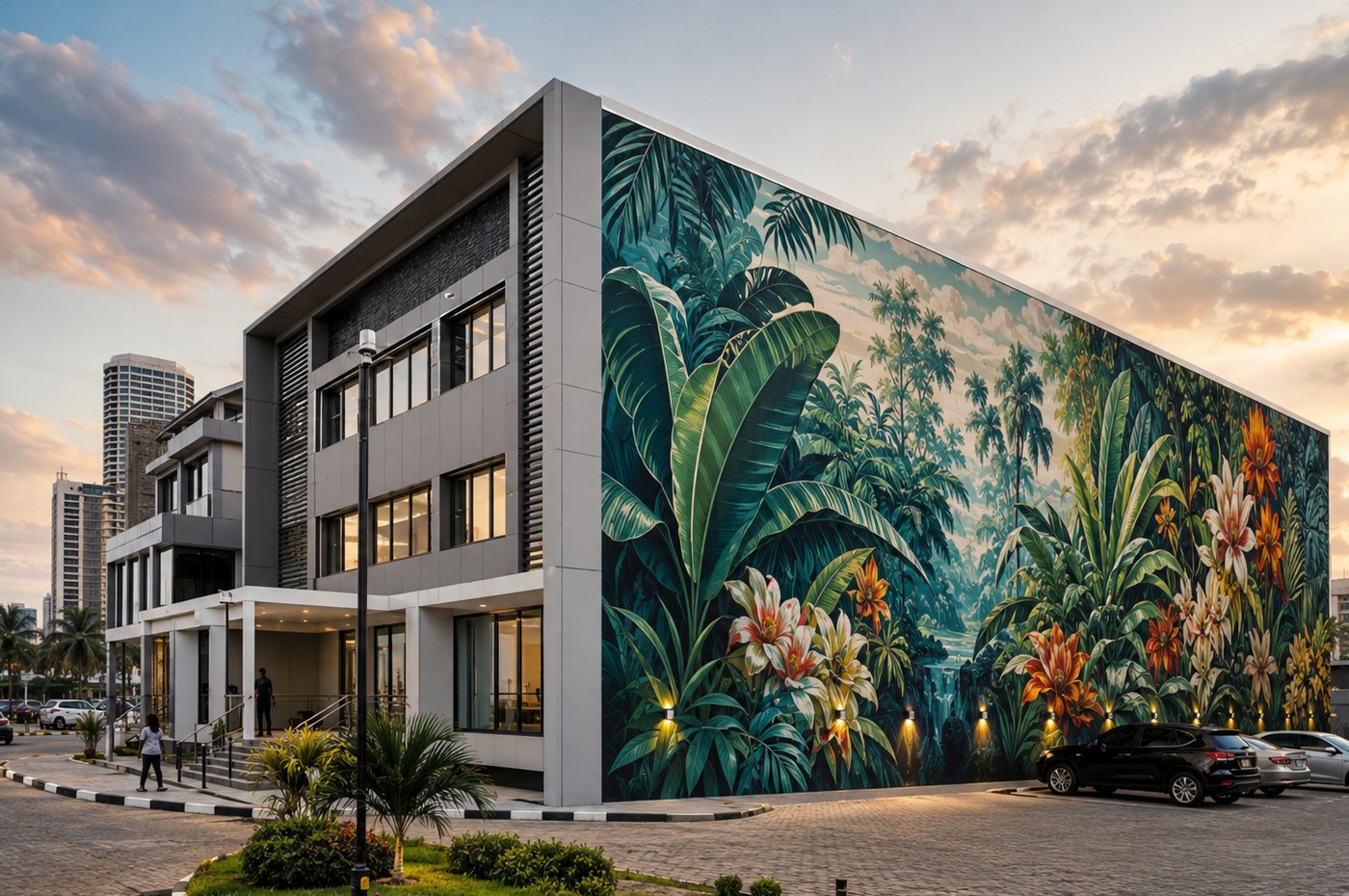
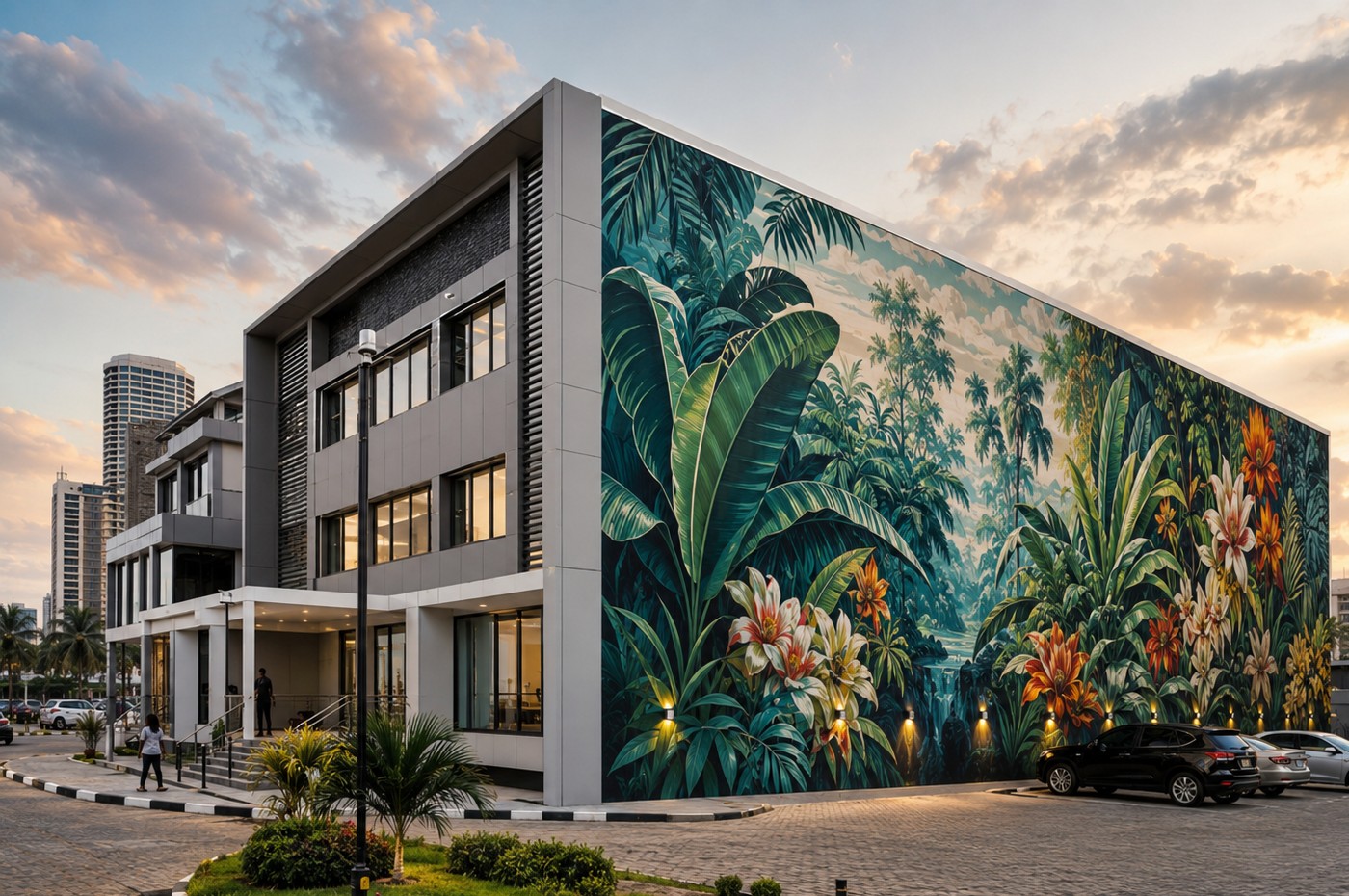
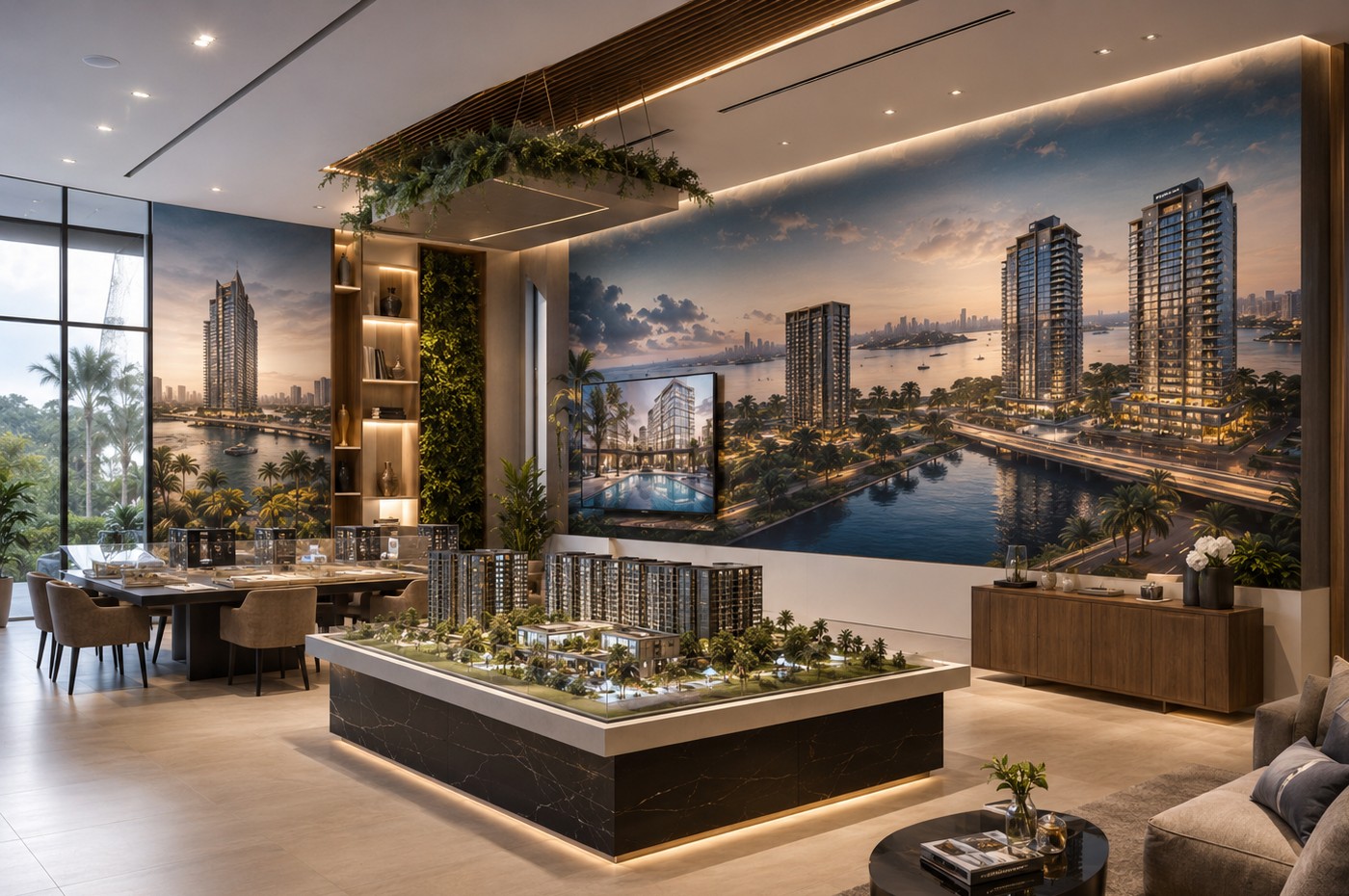
Exterior graphics can create identity, explain, direct, screen, promote or transform — but the production specification must respond to the actual site.
Arrival walls, entrances, compounds and building-facing surfaces that establish a clear sense of place.
Directional information, parking guidance, pedestrian routes and public-facing orientation across larger sites.
Public information, development communication, tourism, heritage and interpretive graphics designed for outdoor viewing.
Campaign walls, construction hoardings, launch environments and branded surfaces that work at street scale.
Large visual compositions that give courtyards, shared spaces and otherwise blank elevations a memorable identity.
Wall, selected rigid-surface and directional graphics planned as one visual language across the site.
Scale, distance and context change how artwork is read outdoors. We design around the building and the route through the site rather than treating the wall as an isolated canvas.
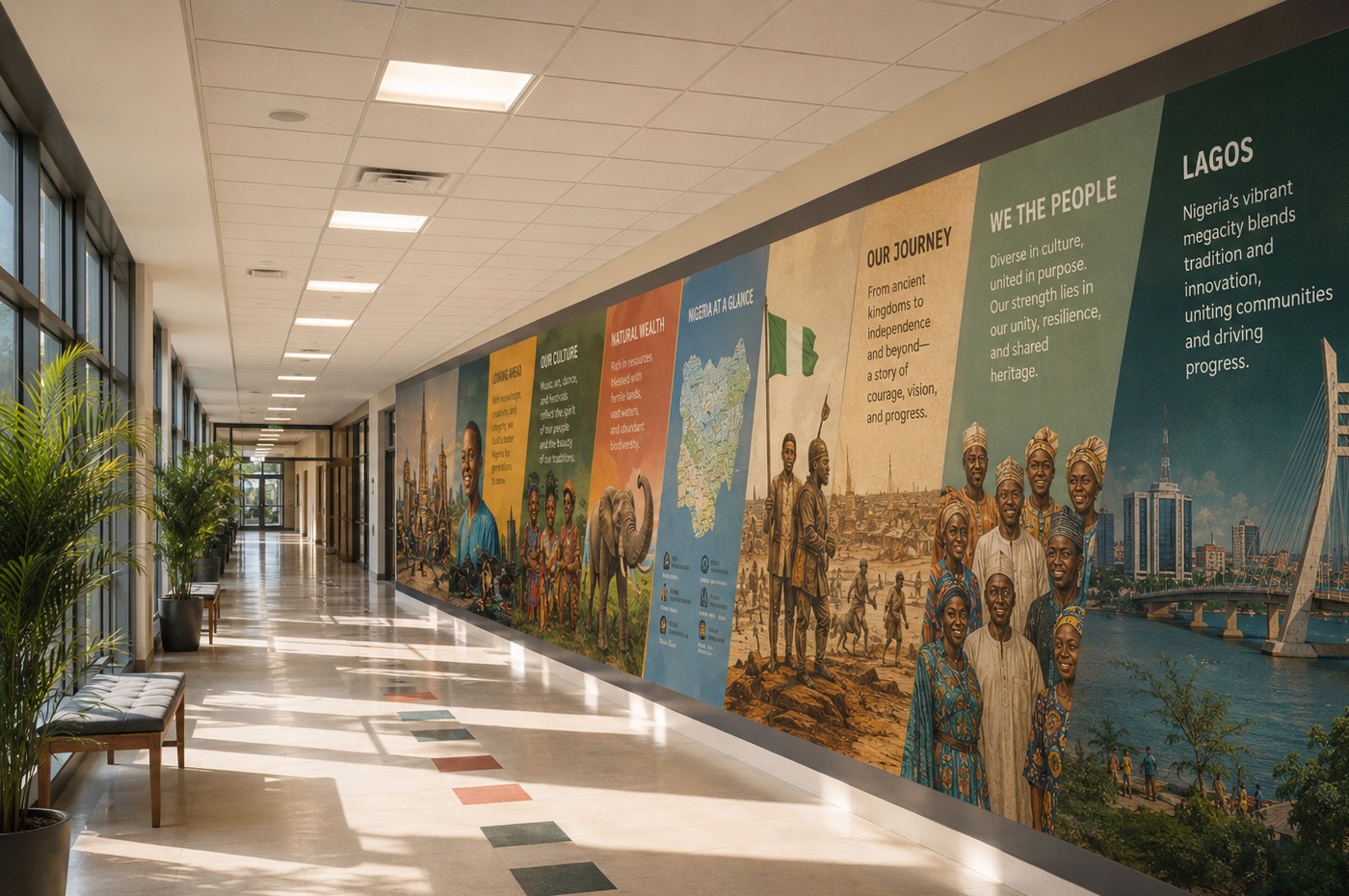
Outdoor performance is project-specific. Paint chemistry, porosity, texture, moisture, sunlight, rainfall, cleaning, pollution and physical exposure all affect the recommended preparation and finish.
We review the substrate, existing coatings, condition, access and whether the surface is appropriate for direct production.
Orientation, UV, rain, moisture, traffic, cleaning and local site conditions influence the production specification.
Adhesion and finish can be checked on representative areas or samples before a large or demanding exterior installation.
Where the project requires it, a compatible protective strategy can be considered around the intended exposure and maintenance regime.
Decorative, directional, informational, commercial or civic — depending on the brief and the suitability of the real surface.
A photo, rough dimensions, surface information and a short description of the exposure are enough to begin a concept and suitability review.