
Explain
Science, geography, mathematics, language and subject-specific reference graphics.
Pingendi turns walls, floors, corridors, libraries and specialist learning spaces into visual teaching tools — designed around the curriculum, the audience and the architecture.
Educational graphics work best when they do a job. A surface can become a permanent reference, an interactive activity, a timeline, a map, a story world or a wayfinding system.
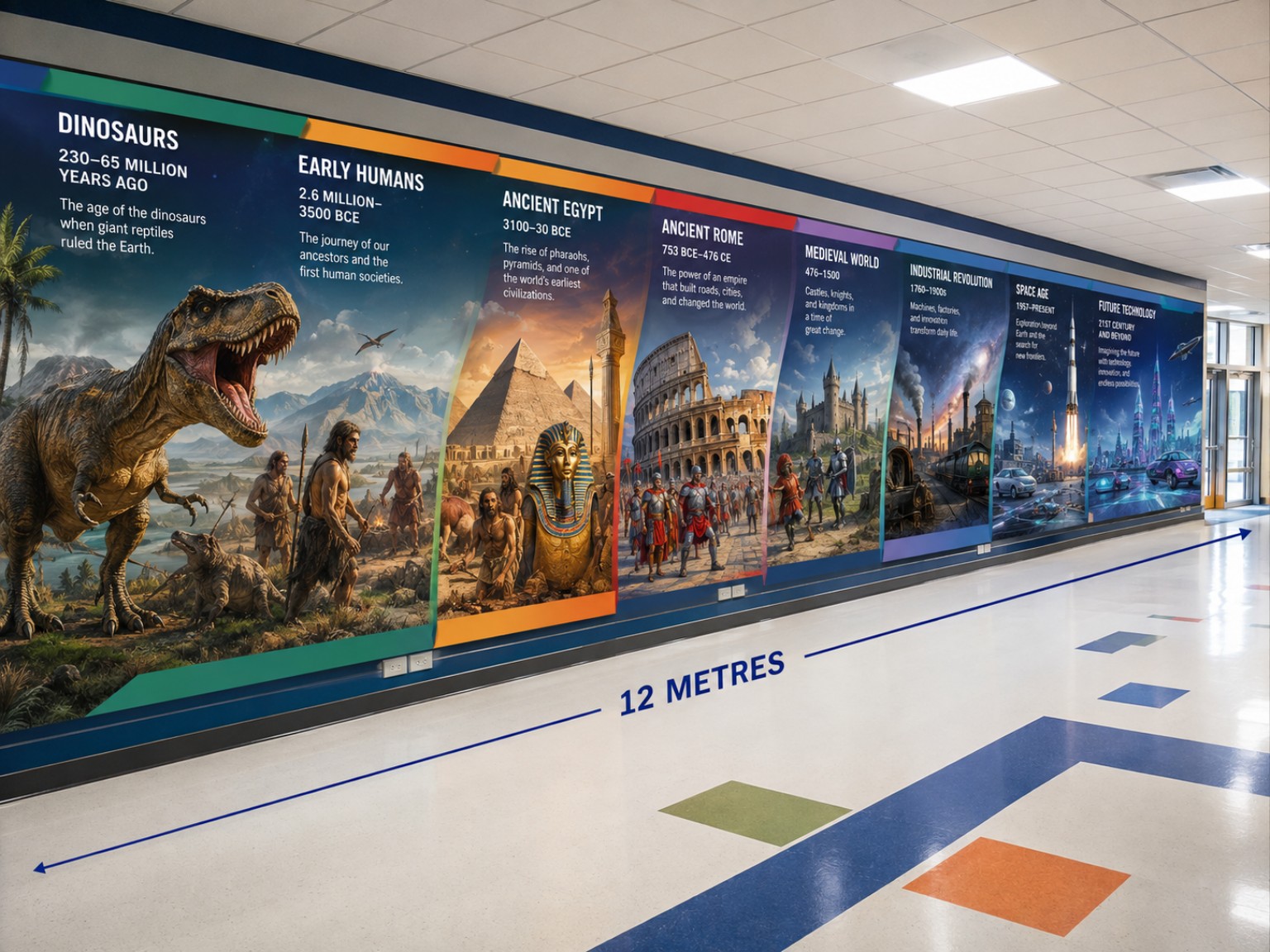
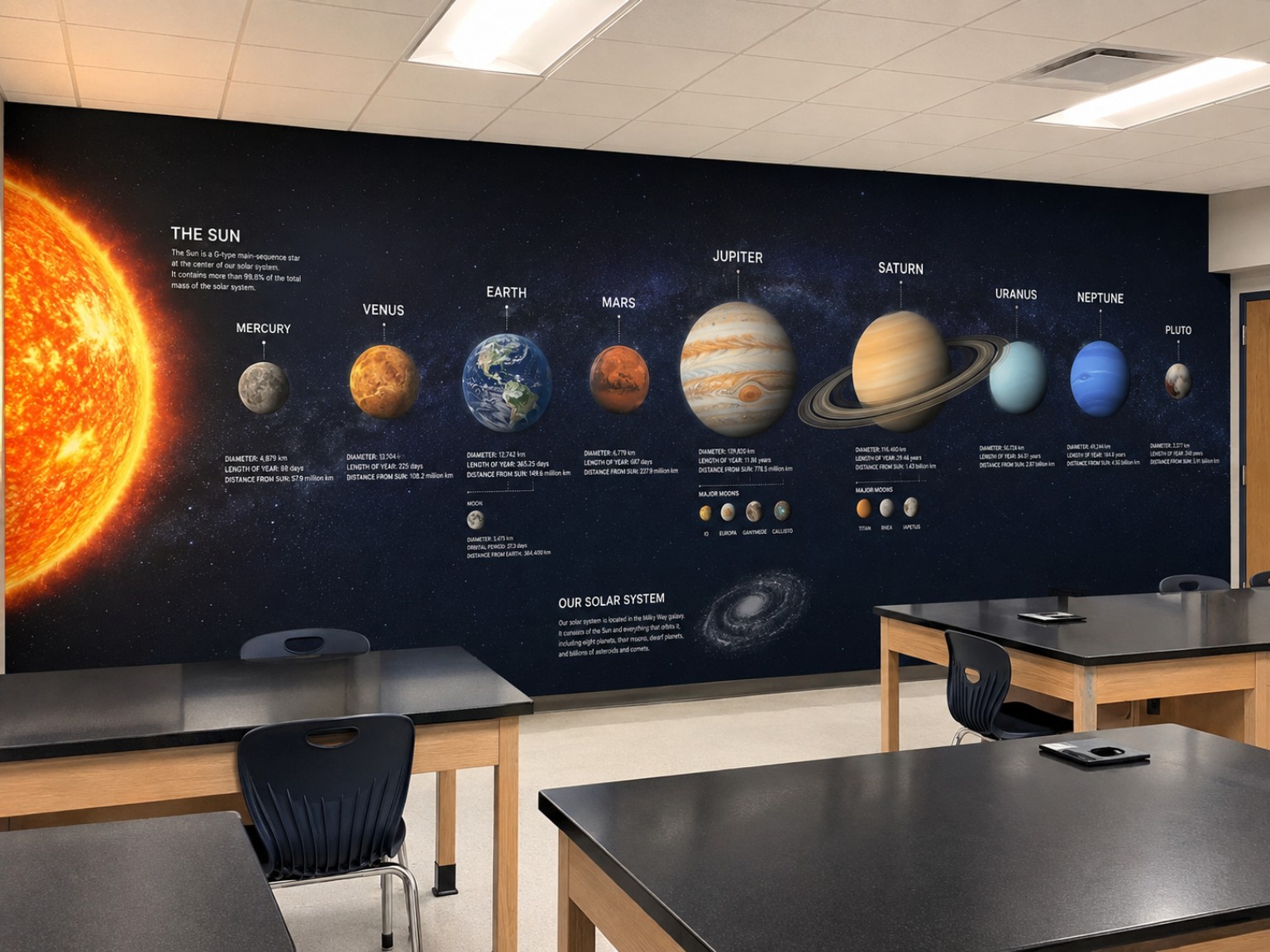
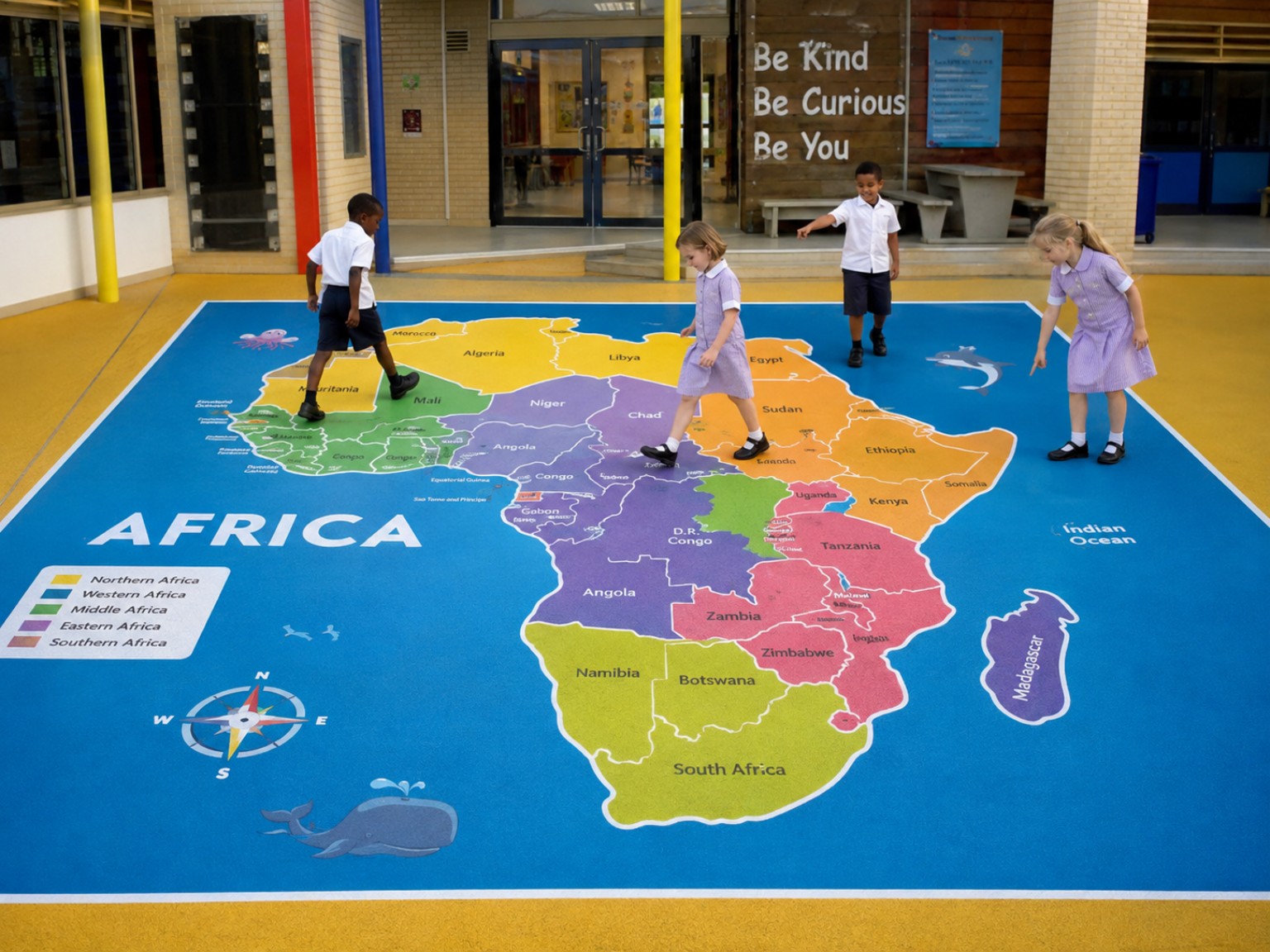
The visual system should suit the age group, subject, teaching method and physical environment — not repeat the same mural everywhere.
Science, geography, mathematics, language and subject-specific reference graphics.
Timelines, processes, historical journeys and long-form stories designed for corridors and circulation routes.
Floor maps, games, routes, number systems and activity zones that support movement-based learning.
Libraries, reading corners, early-years spaces and themed environments that create curiosity and atmosphere.
Campus maps, departmental identity, colour coding, room finding and visual orientation.
School values, achievements, house systems, heritage and identity integrated into everyday spaces.
Walls, floors and selected rigid surfaces can each play a different role while still feeling like one coordinated learning environment.
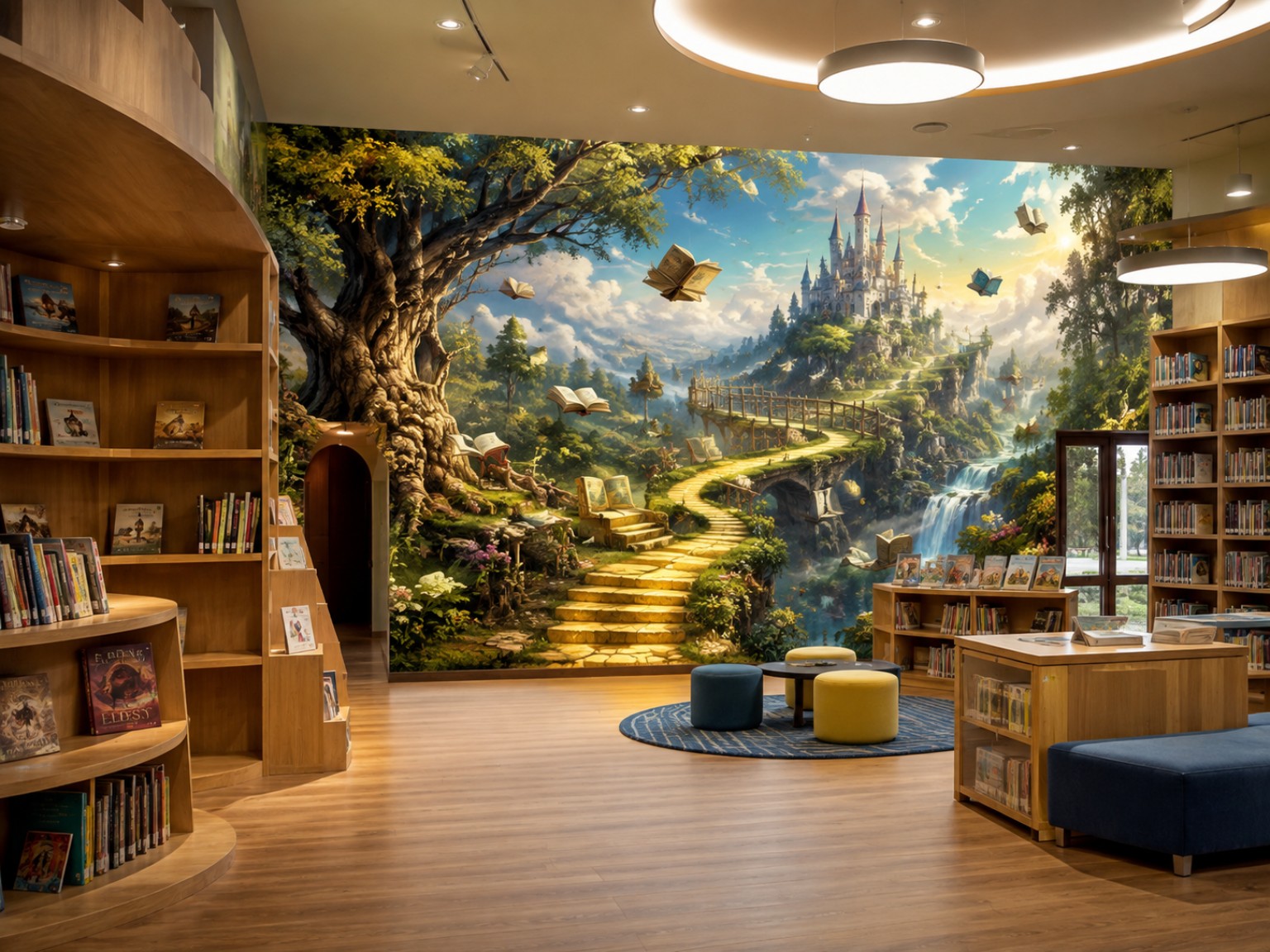
We start with the learning objective and the physical environment, then build the visual hierarchy around viewing distance, movement, age group, accessibility and durability.
What should students understand, remember, discover or interact with?
Walls, floors, corridors, libraries, labs, sports areas and selected rigid surfaces.
Large ideas, labels, illustrations, facts and wayfinding are composed for the real viewing distance.
The approved artwork is translated into the environment using project-specific surface preparation and production settings.
Each application can be instructional, interactive, navigational, cultural or decorative — depending on the brief.
A photo, rough dimensions and the learning objective are enough to begin a concept direction.