Substrate stability
Paint adhesion, porosity, gloss, texture, dust, contamination and existing coatings all influence how the print bonds and looks.
Direct-to-surface UV graphics are produced for real environments, but expected service life depends on the complete system: substrate, preparation, exposure, traffic, cleaning and any project-specific protection.
A quiet interior wall, a frequently cleaned reception, a public floor and an exterior surface do not face the same conditions. We specify around the actual use rather than publish one blanket lifespan for every project.


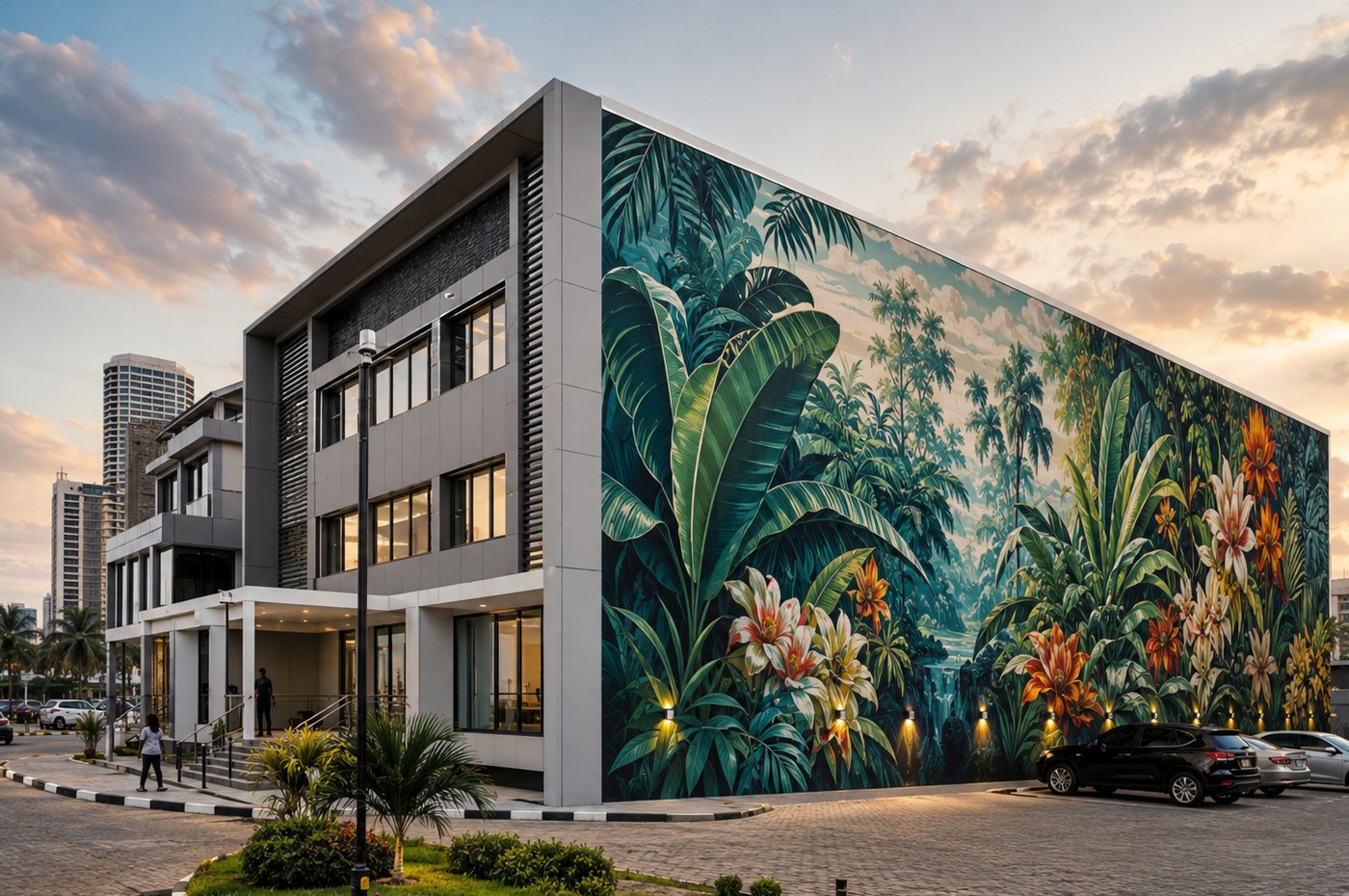
The print is only one layer in a larger material and maintenance system.
Paint adhesion, porosity, gloss, texture, dust, contamination and existing coatings all influence how the print bonds and looks.
A stable, properly prepared surface gives the production system a better foundation than damaged, dusty or poorly bonded coatings.
Sun, UV, heat, humidity, moisture and rain can change how an exterior or sun-exposed installation should be specified.
Decorative walls, frequently touched surfaces and walked-on floors experience very different mechanical wear.
Repeated scrubbing, harsh chemicals and abrasive tools can affect the print or protective finish and should never be assumed safe.
Selected projects may benefit from a compatible protective system after testing, especially where cleaning, wear or exposure is demanding.
The correct care plan follows where the graphic lives and how people interact with it.
Often the least demanding condition: limited abrasion, controlled weather and predictable cleaning. Suitability still depends on the paint and surface condition.
Typical focusStable coating · normal interior cleaning · low contactTraffic, shoes, wheels, repeated cleaning and abrasion become central to the specification. Protection and maintenance may be more important than on a wall.
Typical focusWear · cleanability · slip considerations · protectionWeather, UV, moisture, substrate movement and local conditions increase variability. Testing and project-specific protection become especially important.
Typical focusExposure · adhesion · moisture · UV · maintenanceCare guidance should match the substrate and any protective finish. Where the final cleaning regime is demanding, we prefer to test it before production rather than discover incompatibility afterwards.
Explore materials & surfacesFor selected floors, high-contact areas or exposed work, a compatible protective finish may be considered after testing the full system.
To support cleanability, wear resistance or exposure requirements where the intended use justifies an additional layer.
Substrate, preparation, ink, primer where required, protective product and the actual cleaning/usage conditions should be considered together.
A protective coating can alter gloss, texture, colour appearance or slip behaviour, so the desired finish should be confirmed before production.
Traffic and safety requirements vary by environment. Floor projects are specified individually rather than treated like vertical wall graphics.
Until Pingendi has accumulated its own long-term field data across different materials and environments, we prefer defensible project-specific guidance over exaggerated universal lifetime claims.
For relevant projects, the final handover can identify the surface, intended cleaning approach, any protective finish and the practical conditions that influenced the specification.
Surface and finish recorded
Cleaning approach explained
Protection noted where used
Project-specific cautions identified
Send a photo, material information, location and expected use. We’ll assess the appropriate production, protection and care approach.