Painted plaster & drywall
Ideal for many interior feature walls, corridors, offices, schools, hospitality and private spaces.
Check paint stability, cleanliness, texture and surface treatments.Pingendi works across walls, floors and selected rigid materials, but the right production method starts with the real surface: its coating, texture, porosity, exposure, traffic and intended finish.
Two surfaces that look identical can behave differently because of paint chemistry, sealers, moisture, cleaning products, texture or exposure. We assess and test before confirming production.
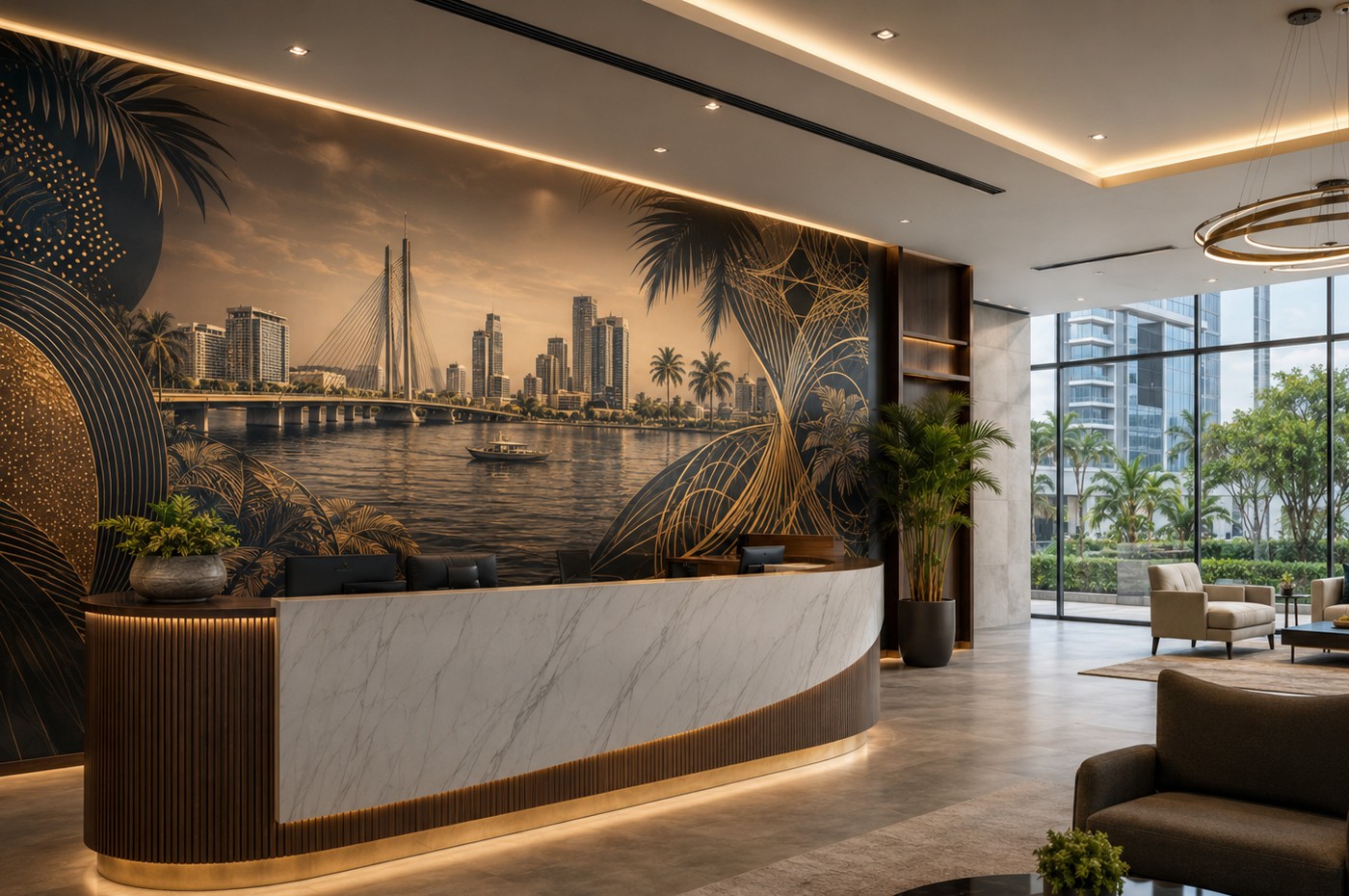

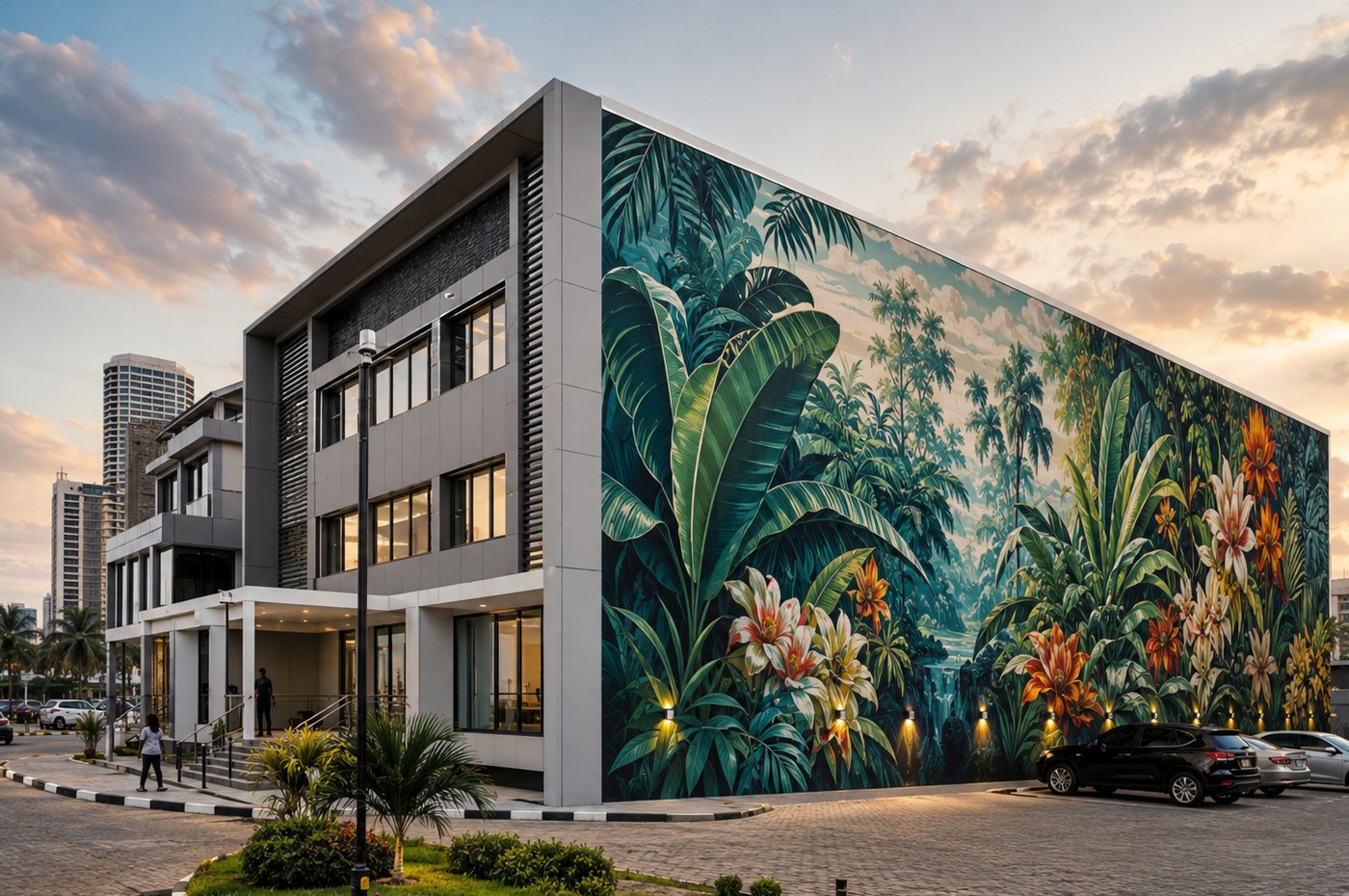
These are typical material families we may assess for a project. Suitability is always confirmed on the actual substrate and finish.
Ideal for many interior feature walls, corridors, offices, schools, hospitality and private spaces.
Check paint stability, cleanliness, texture and surface treatments.Suitable for selected architectural, commercial, public and exterior applications.
Porosity, dust, moisture and roughness may require preparation or primer.Useful for feature walls, hospitality, placemaking and selected exterior concepts.
Texture influences edge sharpness, coverage and the visual character of the print.Selected boards and finished wood surfaces can support off-wall and coordinated installations.
Coating, grain, finish and panel stability determine the setup.Selected transparent and rigid applications can use white ink to build opacity and preserve colour.
Cleaning, coating and adhesion behaviour must be tested.Selected prepared ceramic and coated metal surfaces can support architectural or branded applications.
Gloss, coating chemistry, surface energy and cleaning products matter.Directional, promotional, educational and decorative graphics can be planned for suitable floor surfaces.
Traffic, slip performance, cleaning, wear and protective finishing are part of the specification.Other suitable boards and fabricated surfaces may be considered where access, stability and adhesion allow.
We prefer testing the actual material rather than relying on a generic substrate claim.White ink can create an opaque foundation beneath colour, preserve bright highlights on dark surfaces and support selected transparent applications when the material and finish are suitable.
White beneath colour helps retain intended colour on darker substrates.
Selected transparent applications can combine white and colour to control visibility.
White can become part of the artwork rather than only a hidden base layer.
Ink order, adhesion and finish are specified around the actual material.
The material is only one part of the decision. Site conditions and intended use influence preparation, ink strategy and any protective finish.
Cleanliness, stability, porosity, coating and existing treatments.
Interior or exterior exposure, moisture, heat, UV and surrounding conditions.
Viewing distance, touch, traffic, cleaning frequency and expected wear.
Required appearance, white-ink strategy and project-specific protection where appropriate.
A clear photo, dimensions, material information and intended use are enough to begin a suitability discussion.